




Added to your cart
There are no more items in your cart
Back to school! How to choose a new bed for your child and ensure quality sleep?
Back to school! How to choose a new bed for your child and ensure quality sleep?
As summer comes to an end and the autumn season approaches, we start thinking more and more about autumn tasks and children's education. With the fun and entertainment of summer behind us, we begin to consider what we might be missing to make the return to our usual daily routine as smooth and simple as possible. Good and quality rest can provide everything needed to welcome a new day. The topic of sleep becomes even more relevant and sensitive when the conversation turns to our children. Rest is much more important for children than for adults. Regardless of their activity level, children have a much lower tolerance for sleep deprivation, so when choosing a bed for your child, it’s important to consider a few key things that will significantly improve your child's sleep throughout the night.

Child's Age
When choosing a bed for your child, it is important to consider their age. Children grow up quickly, and a bed that is too small or short may be outgrown in no time, meaning you will need to change it again in a year or two. The younger the child, the faster they grow. It is estimated that a child may need to change their bed 1-2 times before reaching adulthood. After outgrowing a crib, it is recommended to buy a larger single bed that could last longer, although this is often dictated by the size of the child's room, which may not always allow for the desired bed size. Regardless, parents need to find a balance between the room's space and the size of the bed, remembering that, like adults, a bed is the only essential piece of furniture ensuring a restful sleep and relaxation for a child.
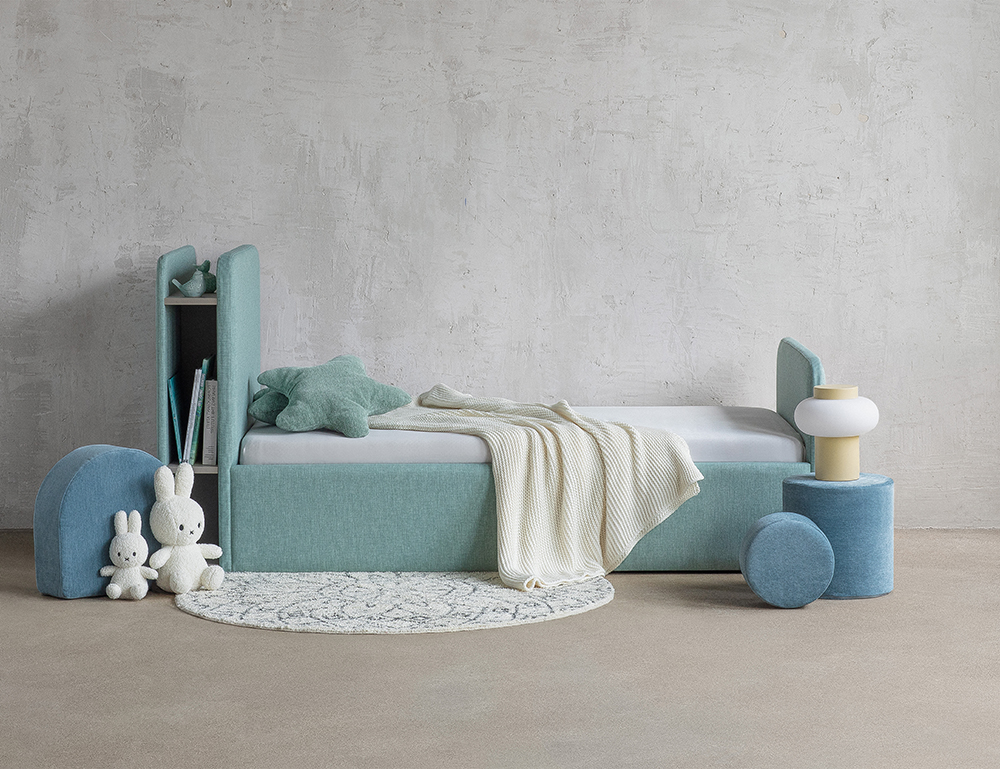
When choosing a bed for an 8-9-year-old child, it is also worth considering extra space for storing items. Bedside tables or puffs can be very useful for this purpose, as a child entering adolescence will experience rapidly increasing needs, and the amount of their belongings and clothes may become a problem.
Practicality
The child's bed should be a practical choice in terms of price, reliability, and ease of cleaning. Of course, it’s not always easy to determine if a bed is truly reliable and sturdy, but when making your selection, be sure to raise this question. Test the bed yourself, sit on it, and check if it stands firmly on the floor and is stable. Let your child test the bed as well. Trust me, they will not only sleep on it but might also use it as a trampoline sometimes. A bed for children is the most fun play area at home, so feel free to press on different spots of the bed and see if it retains its shape and doesn’t squeak. Also, choose a bed made from easily cleaned materials.
No less important for ensuring good sleep is the mattress. Consider the firmness of the mattress. A softer mattress will be more comfortable, but a firmer one may be more resistant to external factors and will maintain its shape longer. It all depends on what firmness of mattress your child is used to. Experts tend to agree that parents know best what firmness their child needs, but it’s always helpful to consider the child’s individual needs.

Which bed is suitable for my child?
For young and inexperienced parents, buying a new bed for their child can be quite a challenge. There are more questions than answers, and finding the right solutions is more complicated than it may seem at first. However, there are a few rules that will help you choose the right bed for your child, and the process of searching will become enjoyable and not overwhelming.
-
Health. One of the most important things is your child's health, and the bed can be closely related to that. If your child is allergic to synthetic materials, has health or physical problems, choose a bed that doesn’t have additional irritants to your child’s health. In the case of allergies, choose a bed with an anti-allergy mattress, and if there are physical issues, consult an orthopedic doctor about the proper mattress choice.
-
Appearance. Don't expect that the appearance of the bed will be irrelevant to your child. Children are some of the most sensitive when it comes to creating the atmosphere of their room, so consider their imagination and present them with some bed options that you have previously selected. When visiting bed stores, bring your child along, let them try different beds, and involve them in the entire selection process. The child will be happy to feel that their opinion matters, and you will be happy to see their glowing eyes.
-
Access. Make sure the bed is easily accessible for both you and your child. Convenient access can be guaranteed by choosing the right bed size for your child. Also, if you are moving the bed to a new location and your child was used to sleeping near a wall, try to make sure the wall is on the same side as the bed in the new location.
Additional Tips for Quality Sleep
To ensure quality sleep for your child, it’s important to introduce them to a new routine after selecting a new bed. After summer holidays, the evenings are still quite bright, which makes it hard for children to understand why they should go to bed when there is so much more to do. Create a sleep-friendly atmosphere in the child’s room: buy darkening, light-blocking curtains, get a new interesting book to read before bed, and significantly limit the use of mobile devices or watching TV. Studies have shown that smaller screen devices, such as mobile phones or tablets, shorten children's sleep time much more because they require more concentration, present a lot of different information that distracts them, and games affect children’s subconscious, making it much harder for them to calm down and fall asleep. Lack of sleep and rest leads to low concentration, activity, and productivity in children, making it difficult for them to focus and absorb information at school, so clear home rules should be in place that define the use of mobile devices, especially in the evening. Children up to about 12 years old should get at least 10 hours of sleep, and during adolescence, the sleep time should be 9-10 hours.
MATTRESSES for babies and CHILDREN SPRING MATTRESSES FOR TEENS

